

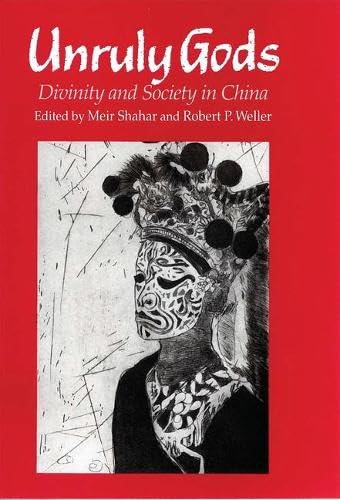
Unruly Gods : Divinity and Society in China / ed. by Robert P. Weller, Meir Shahar.
Material type: TextPublisher: Honolulu : University of Hawaii Press, [1996]Copyright date: ©1996Description: 1 online resource (304 p.)Content type:
 - 9780824865429
- 299/.51 20
- online - DeGruyter
| Item type | Current library | Call number | URL | Status | Notes | Barcode | |
|---|---|---|---|---|---|---|---|
 eBook
eBook
|
Biblioteca "Angelicum" Pont. Univ. S.Tommaso d'Aquino Nuvola online | online - DeGruyter (Browse shelf(Opens below)) | Online access | Not for loan (Accesso limitato) | Accesso per gli utenti autorizzati / Access for authorized users | (dgr)9780824865429 |
Frontmatter -- Contents -- Acknowledgments -- 1. Introduction: Gods and Society in China -- 2. Personal Relations and Bureaucratic Hierarchy in Chinese Religion: Evidence from the Song Dynasty -- 3. Enlightened Alchemist or Immoral Immortal? The Growth of Lü Dongbin’s Cult in Late Imperial China -- 4. The Lady Linshui: How a Woman Became a Goddess -- 5. Myths, Gods, and Family Relations -- 6. Vernacular Fiction and the Transmission of Gods’ Cults in Late Imperial China -- 7. Transmission in Popular Religion: The Jiajiang Festival Troupe of Southern Taiwan -- 8. Matricidal Magistrates and Gambling Gods: Weak States and Strong Spirits in China -- Glossary -- Index -- Contributors
restricted access online access with authorization star
http://purl.org/coar/access_right/c_16ec
The first study in English to offer a systematic introduction to the Chinese pantheon of divinities. It challenges received wisdom about Chinese popular religion, which, until now, presented all Chinese deities as mere functionaries and bureaucrats. The essays in this volume eloquently document the existence of other metaphors that allowed Chinese gods to challenge the traditional power structures and traditional mores of Chinese society. The authors draw on a variety of disciplines and methodologies to throw light on various aspects of the Chinese supernatural. The gallery of gods and goddesses surveyed demonstrates that these deities did not reflect China's socio-political order but rather expressed and negotiated tensions within it. In addition to reflecting the existing order, Chinese gods shaped it, transformed it, and compensated for it, and, as such, their work offers fresh perspectives on the relations between divinity and society in China.
Mode of access: Internet via World Wide Web.
In English.
Description based on online resource; title from PDF title page (publisher's Web site, viewed 02. Mrz 2022)