

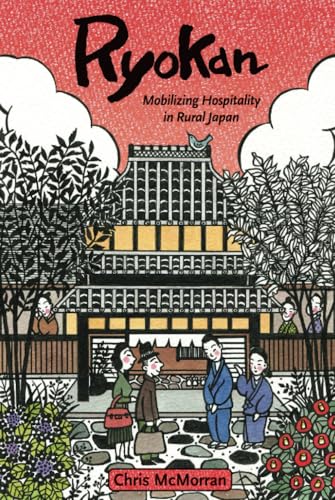
Ryokan : Mobilizing Hospitality in Rural Japan / Chris McMorran.
Material type: TextPublisher: Honolulu : University of Hawaii Press, [2022]Copyright date: ©2022Description: 1 online resource (220 p.) : 11 b&w illustrationsContent type:
 - 9780824888978
- 9780824892289
- 613/.1220952/25 23/eng/20220314
- RA922.K9 M36 2022
- online - DeGruyter
| Item type | Current library | Call number | URL | Status | Notes | Barcode | |
|---|---|---|---|---|---|---|---|
 eBook
eBook
|
Biblioteca "Angelicum" Pont. Univ. S.Tommaso d'Aquino Nuvola online | online - DeGruyter (Browse shelf(Opens below)) | Online access | Not for loan (Accesso limitato) | Accesso per gli utenti autorizzati / Access for authorized users | (dgr)9780824892289 |
Frontmatter -- Contents -- Acknowledgments -- Prologue: Work to Do -- Chapter 1. Retreat -- Chapter 2. Landscaping the Countryside -- Chapter 3. Pariah in Paradise -- Chapter 4. Inside Job -- Chapter 5. How to Succeed in Business -- Chapter 6. A Day in the Life -- Chapter 7. Women without Homes -- Chapter 8. Professional Care? -- Chapter 9. Policing Ryokan Space -- Epilogue -- Notes -- Bibliography -- Index
restricted access online access with authorization star
http://purl.org/coar/access_right/c_16ec
Amid the decline of many of Japan’s rural communities, the hot springs village resort of Kurokawa Onsen is a rare, bright spot. Its two dozen traditional inns, or ryokan, draw nearly a million tourists a year eager to admire its landscape, experience its hospitality, and soak in its hot springs. As a result, these ryokan have enticed village youth to return home to take over successful family businesses and revive the community. Chris McMorran spent nearly two decades researching ryokan in Kurokawa, including a full year of welcoming guests, carrying luggage, scrubbing baths, cleaning rooms, washing dishes, and talking with co-workers and owners about their jobs, relationships, concerns, and aspirations. He presents the realities of ryokan work—celebrated, messy, ignored, exploitative, and liberating—and introduces the people who keep the inns running by making guests feel at home.McMorran explores how Kurokawa’s ryokan mobilize hospitality to create a rural escape from the globalized dimensions of everyday life in urban Japan. Ryokan do this by fusing a romanticized notion of the countryside with an enduring notion of the hospitable woman embodied by nakai, the hired female staff who welcome guests, serve meals, and clean rooms. These women are the face of the ryokan. But hospitality often hides a harsh reality. McMorran found numerous nakai in their 50s, 60s, and 70s who escaped violent or unhappy marriages by finding employment in ryokan. Yet, despite years of experience, nakai remain socially and economically vulnerable. Through this intimate and inventive ethnography of a year in a ryokan, McMorran highlights the importance of both the generational work of ryokan owners and the daily work of their employees, while emphasizing the gulf between them. With its focus on small, family-owned businesses and a mobile, vulnerable workforce, Ryokan makes an invaluable contribution to scholarship on the Japanese workplace. It also will interest students and scholars in geography, mobility studies, and women’s studies and anyone who has ever stayed at a ryokan and is curious about the work that takes place behind the scenes.
Mode of access: Internet via World Wide Web.
In English.
Description based on online resource; title from PDF title page (publisher's Web site, viewed 29. Mai 2023)